
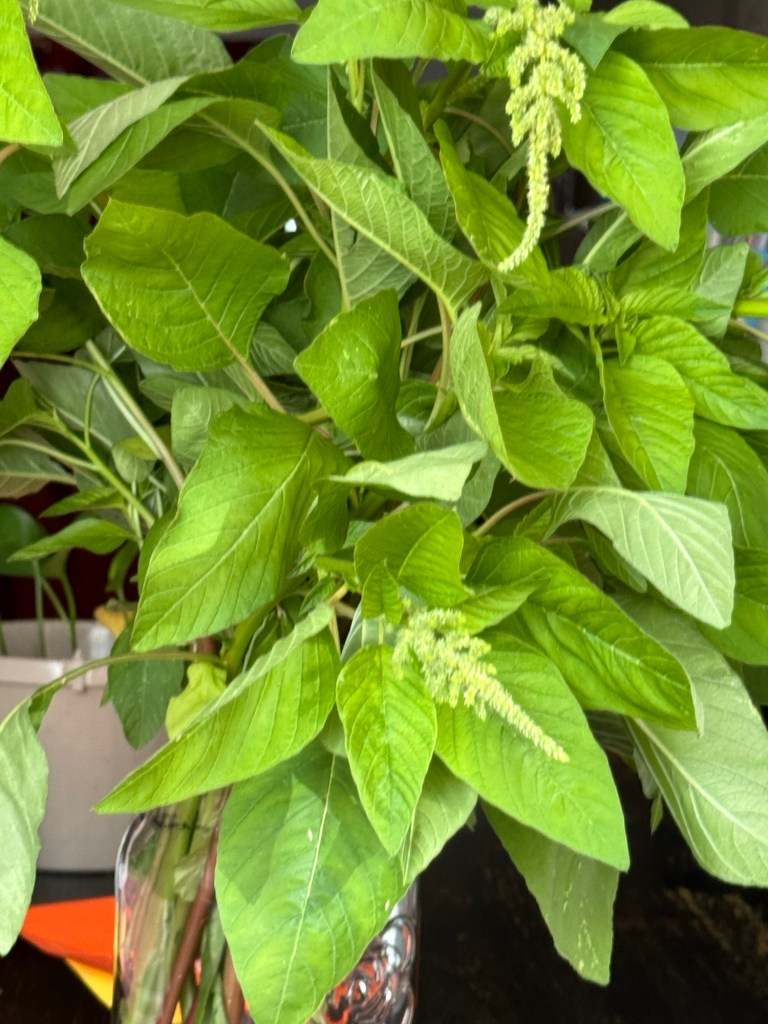
This is my second year growing callaloo, and I’m still learning about this easy-to-grow green delicacy. Last year, we had a better crop, and we enjoyed callaloo all summer long. However, this year’s crop didn’t start off as well. The first set of plants were short and yellowish, while the others, although they grew to a decent height, were tough. Thankfully, after cutting those, new growth emerged, and we finally got a nice, healthy bunch. My son, who is also my co-farmer and planting buddy, was thrilled to harvest the callaloo for the first time.
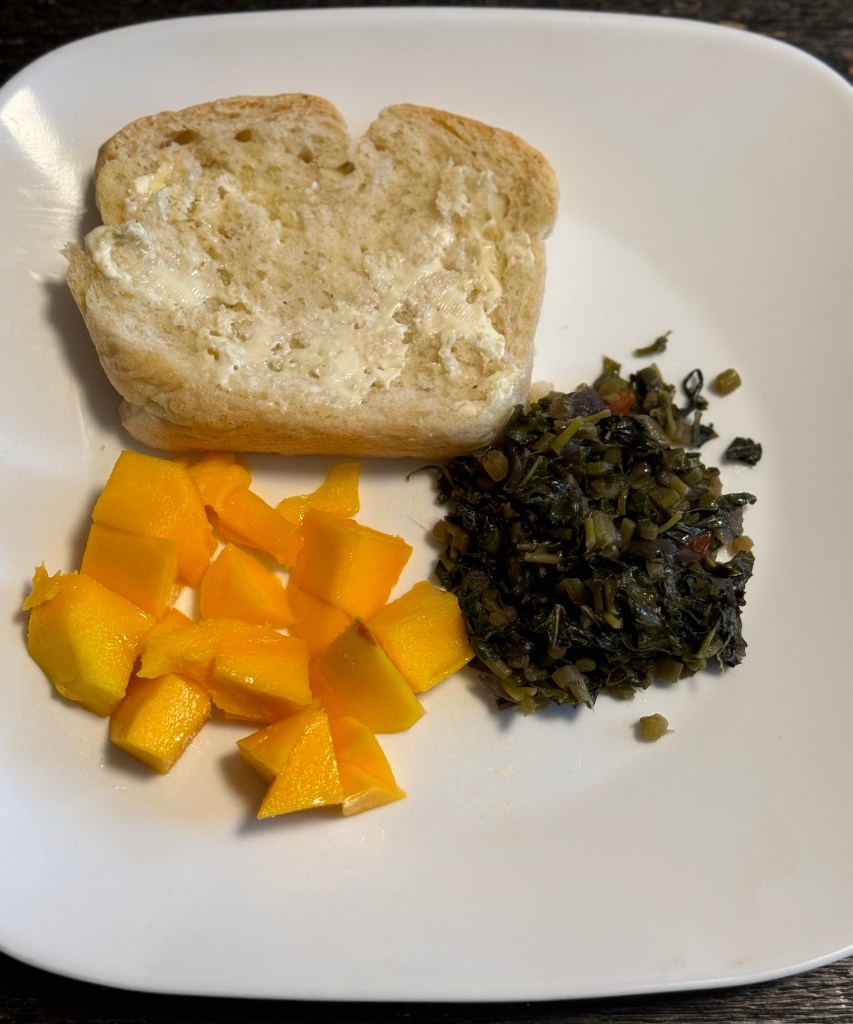
We already knew we wanted to make a hearty, healthy breakfast for Sabbath, so I cleaned up the callaloo and cooked it on Friday. Callaloo and bread is a popular dish I grew up eating in Jamaica, and of course, I’ve introduced this cuisine to my children. To keep things original, from garden to table, I decided to make my own bread to pair with the callaloo. On Saturday morning before church, we sat down to a breakfast of steamed callaloo, bread, and our favorite fresh fruits. It was delicious and kept us full for a few hours.
About Callaloo
Callaloo is an edible plant with large, green leaves. It’s used in various dishes such as stews, soups, and even juices. I also love using it to make callaloo rice, and the stews pair wonderfully with bread, fried dumplings, rice, or ground provisions. Callaloo is a nutrient-rich leafy green vegetable. Here’s a summary of the key benefits:
- Antioxidants: Callaloo is rich in vitamin C, a powerful antioxidant that helps neutralize free radicals, potentially slowing down aging and supporting cognitive function.
- Blood Clotting: High in vitamin K, callaloo is essential for proper blood clotting. A deficiency in vitamin K can lead to excessive bleeding and easy bruising.
- Cancer Risk Reduction: As a cruciferous vegetable, callaloo may help reduce the risk of cancer, according to studies on similar vegetables.
- Collagen Production: Vitamin A in callaloo aids in the production of collagen, which is vital for maintaining youthful skin, strong cartilage, and overall body protein structure.
- Diabetes Management: The fiber in callaloo helps slow carbohydrate absorption, reducing glucose spikes and promoting a feeling of fullness, which can help in weight management.
- Digestive Health: Callaloo’s fiber content supports digestion, helps prevent constipation, and may reduce the risk of hemorrhoids.
- Hair & Skin Health: Vitamin A also benefits the scalp by keeping it moist and promoting skin cell regeneration, which is essential for healthy hair and skin.
- Red Blood Cells: The iron in callaloo supports the production of healthy red blood cells, reducing the risk of anemia.
- Strong Bones: Vitamin K in callaloo contributes to the production of proteins that strengthen bones, teeth, and nails.
Callaloo is a nutrient-dense vegetable that offers a wide range of health benefits, making it a valuable addition to a balanced diet.
God Bless.
 Itz Holistically Wholesome
Leave a comment